BUILDING A CREATOR BUSINESS
Emorgul
An inside look at one creator’s blueprint for success in Worlds
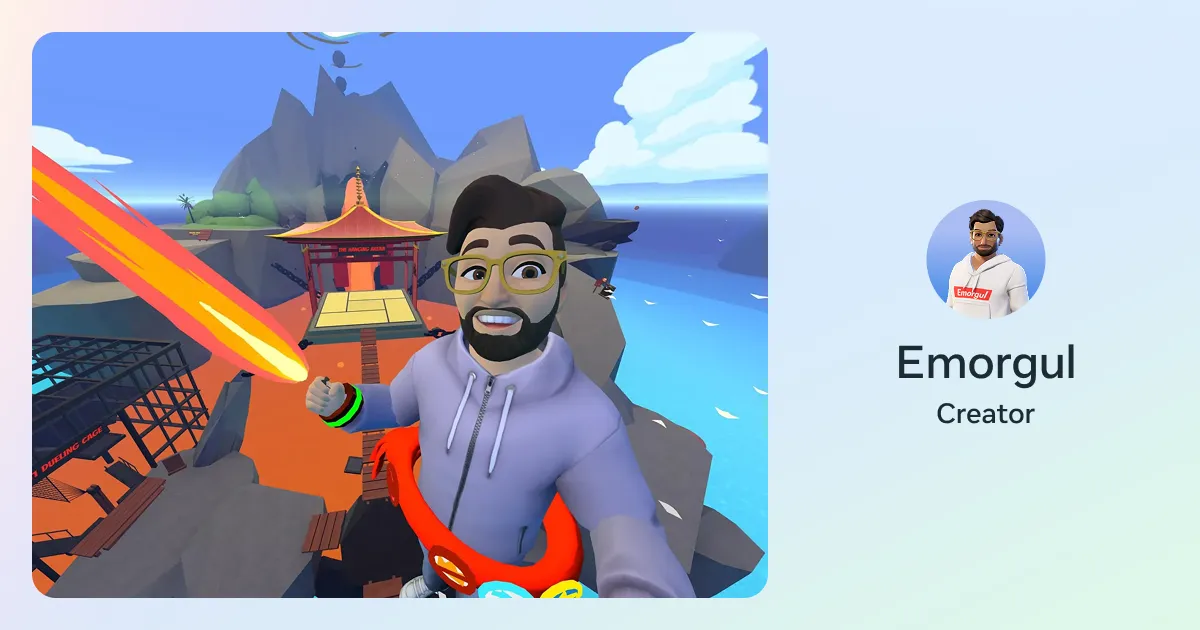
“Make wonderful things that make people happy.”
That’s the simple, but powerful mantra behind one of the most prolific and successful creators in Worlds today—Eugene Morgulis.
Since beginning his journey in 2021, Eugene has published nearly 40 worlds, collaborated on many others and regularly sees his work featured in top rankings. He builds almost daily, and combined, his worlds captivate players for tens of thousands of hours every week. The results of his work ethic speak for themselves: as of May 2025, Eugene’s portfolio accounts for 4 of the 25 most engaging worlds in VR—one of which took less than half a year to build.
But more remarkable than the volume of his work is the philosophy behind it. Eugene’s worlds are vibrant, familiar experiences that are co-created directly with his community. In this case study, we'll unpack the strategies behind his success: how perfecting individual mechanics, building with your community and smart monetization can transform raw passion into a thriving creator business.
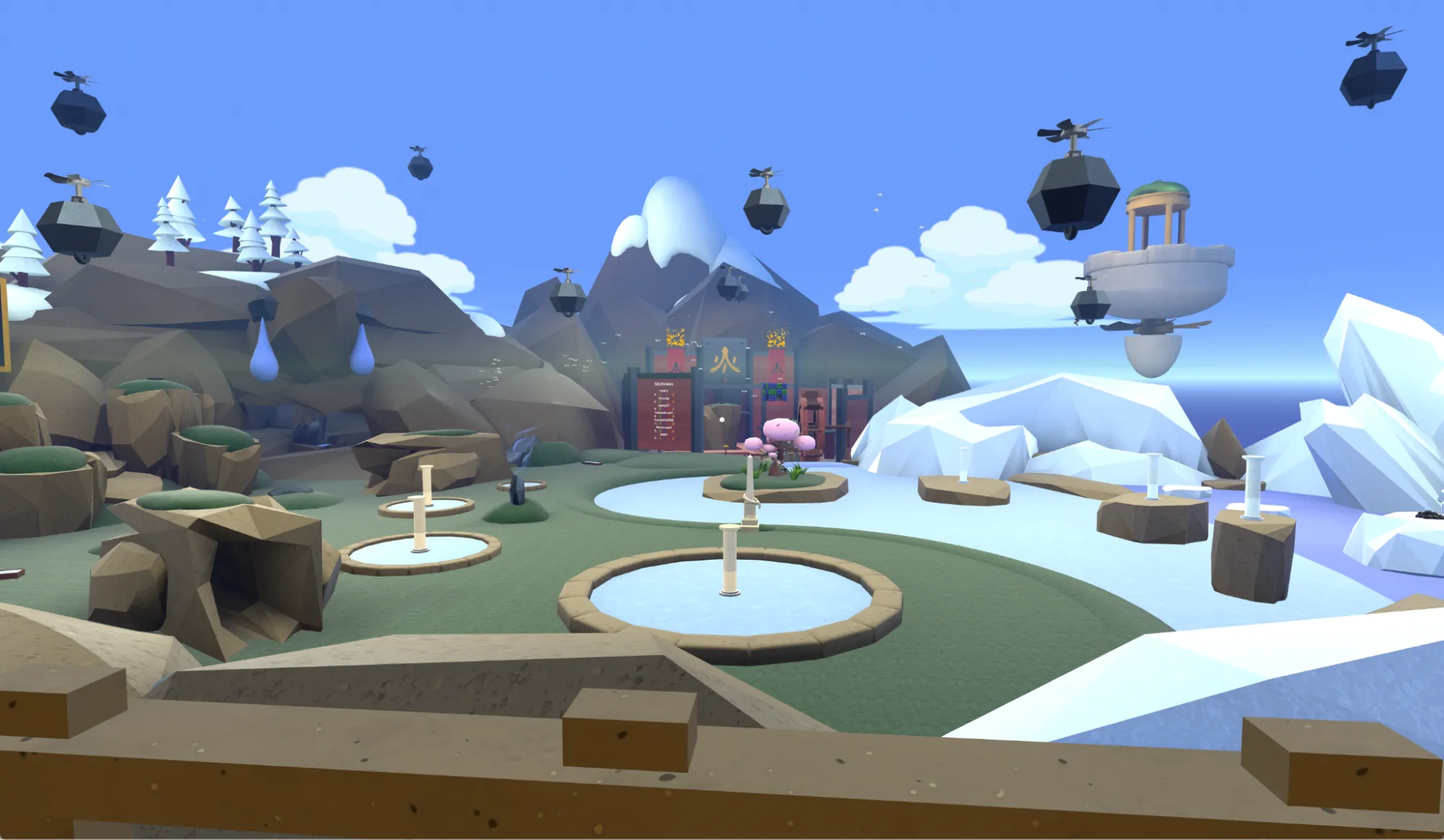
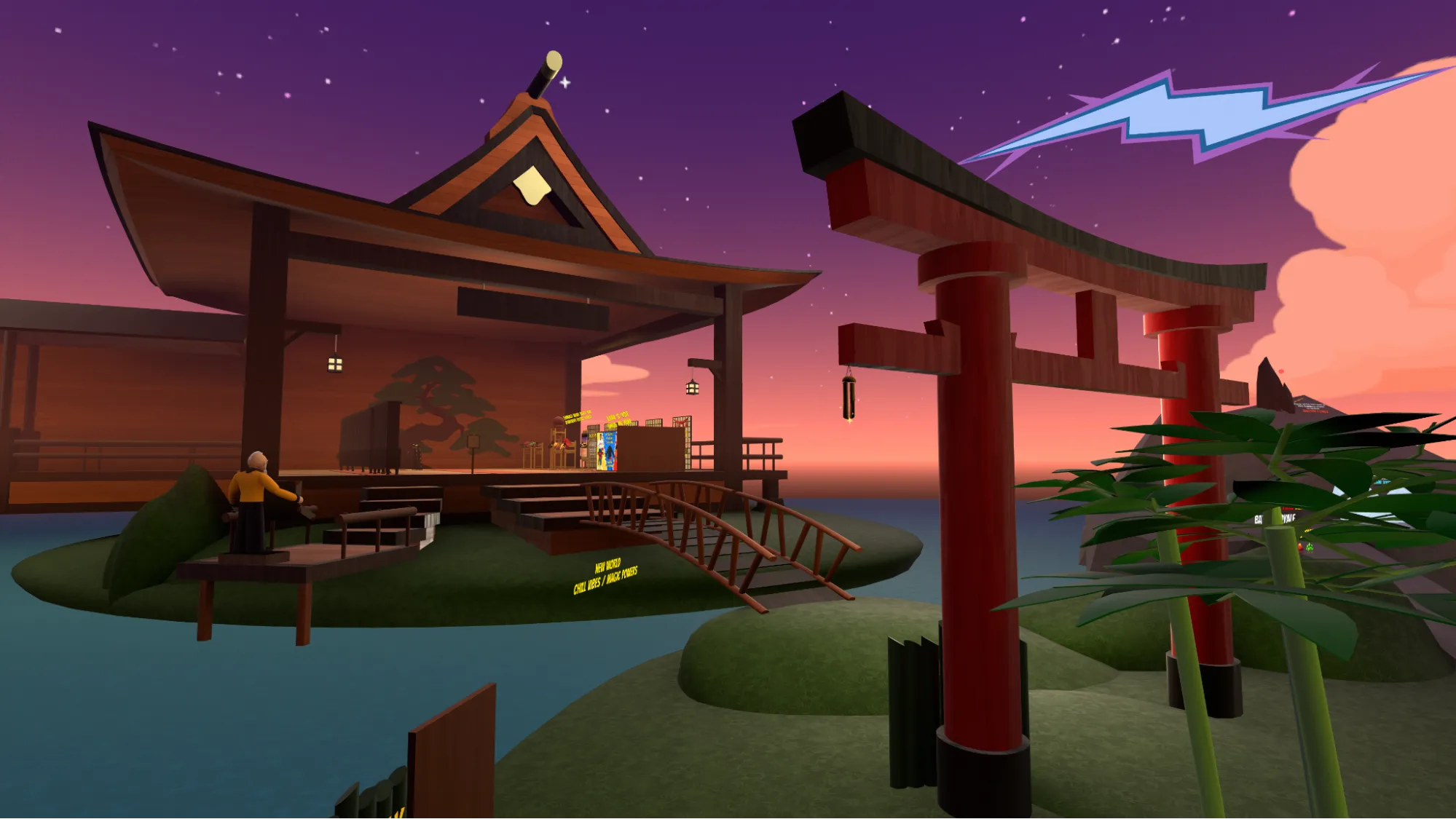
Emorgul's diverse portfolio features worlds that range from samurai duels to elemental battles.
Building worlds that spark joy
Eugene (or Emorgul as he’s known in Worlds) always gravitated towards creative pursuits like painting, writing and woodworking. But it wasn’t until he started building in Worlds that everything clicked. He was fascinated by the creative possibilities and how easy the creation tools were to pick up—so much so that despite having no prior development experience, he dove right in.
 The mantra that I came up for myself was, ‘Make wonderful things that make people happy.’ Worlds let me do that.
Eugene ‘Emorgul’ Morgulis
His first creations were less full-fledged Worlds and more collections of cool mechanics like laser swords and jet packs. These early sandboxes still attracted a following even though they lacked traditional game loops and objectives. Later, after spending hours perfecting a simple bamboo-chopping mechanic for Fire Battling Island, it all came together. "When I finally got it right, I was like, oh, this is its own thing," he remembers. That single interaction inspired what would become one of his most popular worlds, Samurai Tycoon, and cemented the personal mantra behind all his future work.
"I build for whatever gives me that spark of joy," he explains. "You just have to have the sensitivity to feel—am I feeling what I want to be feeling?"
Element Battling Sandboxdisplays this beautifully: fire blasts feel powerful yet balanced. Earth punches have a satisfying impact. Water whips flow gracefully. Instead of relying on complex button combos, Emorgul makes these powers feel natural and familiar by linking them to real-life movements. To use an earth power, for example, you simply reach down to the ground to lift a boulder, then physically punch it to send it flying. This focus on joyful, intuitive interactions has paid off remarkably. As of writing, nearly 1 in 3 visitors who play Element Battling Sandbox continue to play after a week.
Emorgul applies this same platform-first thinking to mobile, where the constraints are completely different. In Thieves and Warlocks, controls are minimal—players can only jump and shoot—but the fun comes from the environment itself. This creates spectacular and surprising effects where, as Emorgul puts it, “The platforms do the work."
Whether in VR or mobile, these experiences reflect Emorgul's fundamental design principles:
- Build experiences around delightful mechanics.
- Make interactions feel natural and intuitive.
- Adapt your design philosophy to the strengths of each platform.
- Trust your own creative compass.
When players become co-creators
From the beginning, Emorgul treated his players as creative partners. He routinely leveraged TikTok polls and Discord to source ideas, asking questions like, “Should this water power be an icicle missile or a spiky snowball?" Emorgul would implement those suggestions so quickly that players could experience them in-world almost immediately.
This feedback loop is central to his method. In Element Battling Sandbox, when players complained that lightning bolts were overpowered, Emorgul nerfed them from 25 to 20 damage points. When they requested cooldowns on air puffs to prevent spamming, he made the adjustment within minutes. "I can do that in five seconds, press publish, and they can play it immediately," he explains.
It’s an incredibly powerful loop—to play a world you like, talk directly to the creator, and then see the thing that you talked about in that world right away.
Eugene ‘Emorgul’ Morgulis
This rapid, responsive process created an incredibly invested community. Soon, players weren't just offering feedback, they were building their own culture. They organized the Element Battling League, a player-run tournament complete with teams, brackets and AI-generated logos. They even launched a community-run wiki to post rankings and share tips and tricks.
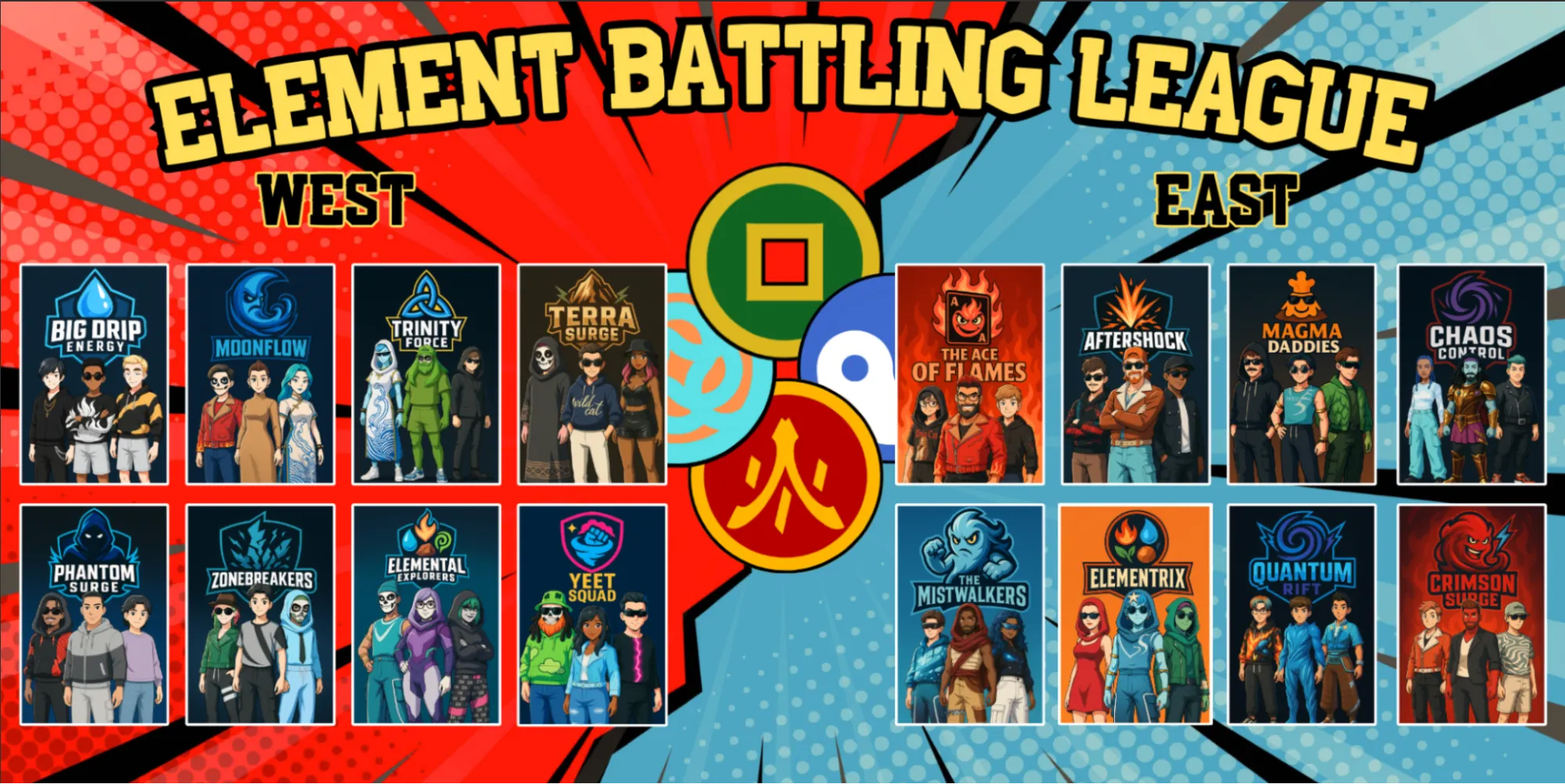
Emorgul took this one step further by fully integrating the community’s tournament as an official part of the world. “They feel a sense of ownership because I'm responsive to suggestions and feedback," he notes.
This sense of ownership helped drive remarkable growth across his entire portfolio. By building strategic doors that connect his experiences, Emorgul created what he calls a “circuit” that encourages players to explore his other worlds. This portfolio effect means the success of one world naturally boosts discovery and traffic for others, creating a self-sustaining ecosystem that keeps players engaged.
Eugene's strategy is guided by a consistent set of principles:
- Use social platforms to preview features and gather specific feedback.
- Implement player suggestions immediately when possible.
- Celebrate and integrate grassroots efforts from your players.
- Connect your worlds to create a portfolio-wide community.
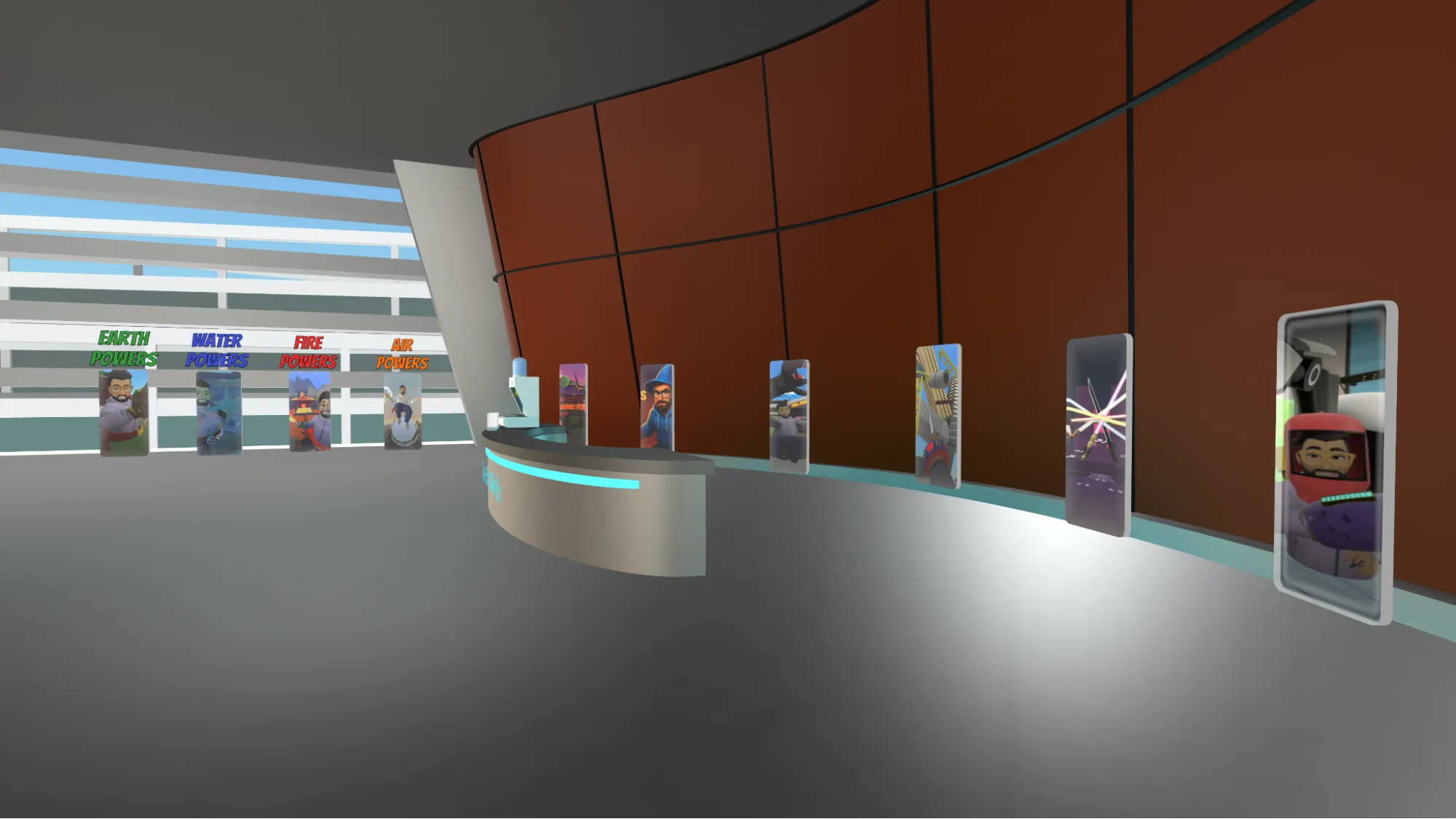
Strategic doors create a circuit through Eugene's portfolio, encouraging players to explore multiple experiences.
From passion project to sustainable business
Even with a passionate community of co-creators, turning a hobby into a full-time career takes resources. The Meta Horizon Creator Program (MHCP) helped make this leap possible for Emorgul. "Without the creator fund, I'd be doing something else," he reflects. "It allows me to pay my mortgage and focus entirely on making wonderful things that make people happy."
He also uses MHCP competitions to test out new workflows. He’s found that both generative AI and the existing asset library are huge time-savers, but only if you treat them as starting points. For instance, Emorgul might use AI to generate an icy cliff face for We’ll Only Make It Together, or a wool texture for a varsity jacket in Element Battling Sandbox. In one hilarious instance, he used a breakfast sandwich from the asset library to fill out his environment: “I saw the types of objects available, but just using those wasn’t enough. I think the water was, at one point, a section of an egg sandwich that I stretched, squashed, and colored blue.”
Regardless of which asset he’s using, Emorgul always dives in to heavily modify the results, erasing flaws, adding his own design elements, and making sure the final product is polished. By using these tools for the first draft, he can spend less time on asset prep and more time perfecting the signature joyful interactions at the heart of his worlds.
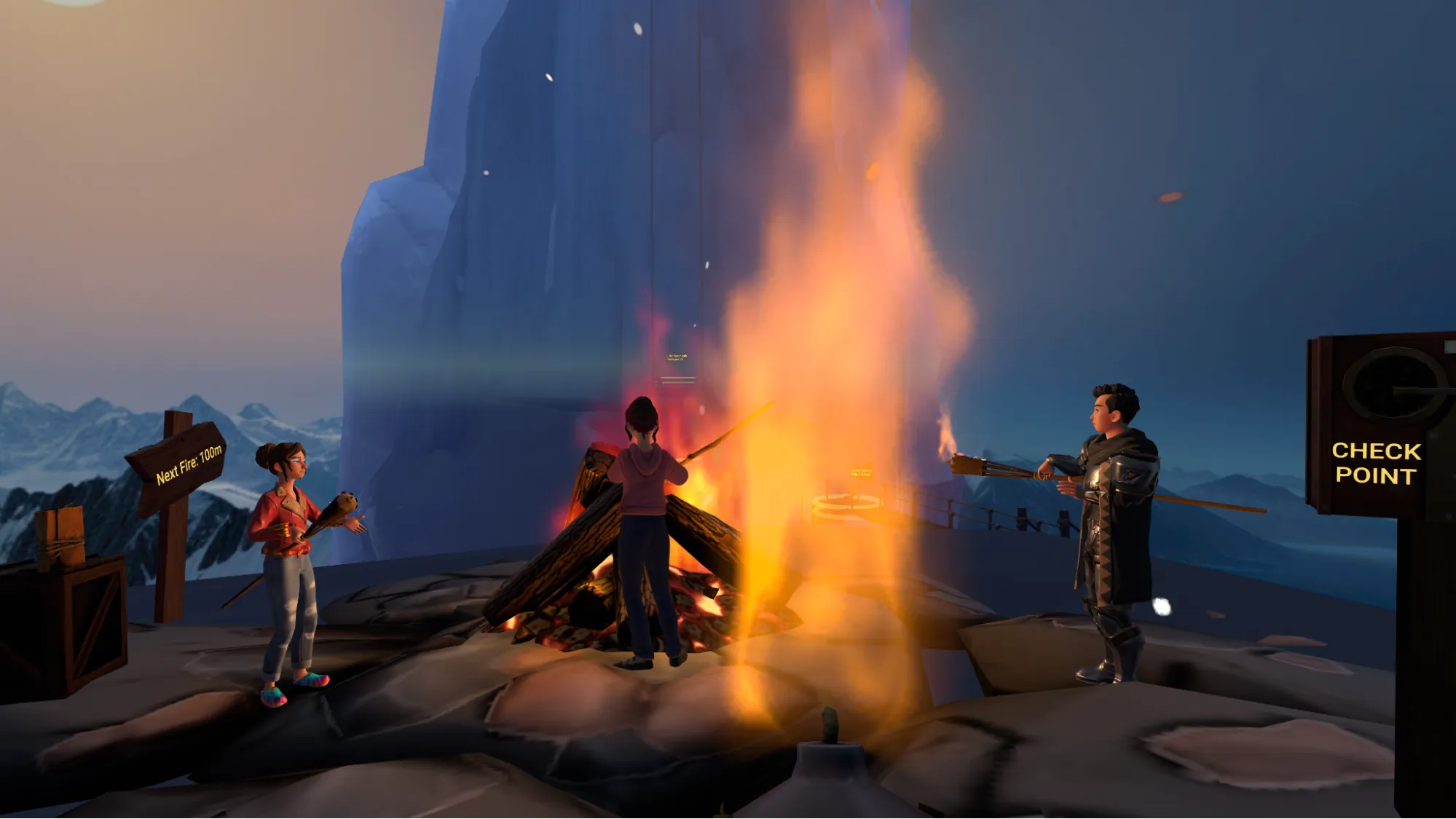
Emorgul’s award-winning co-op world, We’ll Only Make It Together, showcases his focus on creating diverse and collaborative player experiences.
But even the most joyful worlds need a sustainable business model to thrive. For Emorgul, this meant finding an organic way to monetize that wouldn’t alienate the community he’d worked so hard to build. Ironically, the solution to this challenge came from the players themselves. When the Element Battling community began clamoring for ways to customize their powers, he jumped at the opportunity to create cosmetic skins that were flashy, but wouldn’t disrupt his finely-tuned gameplay. "I knew the community didn't want something pay-to-win, but they wanted something that looked a little cooler," he explains.
Because these skins came from actual player requests, and not generic revenue targets, they were a major hit. He built on this success further with an "Emorgul Pass" that bundled skins at a discount, and even included a feature that let players try each skin once for free. In the end, this helped create a fair and generous monetization model the community openly embraced.
Emorgul built on this success by searching for new and fun ways to reward players. He launched an enticing contest in Samurai Tycoon where players could win an exclusive shirt that he designed personally. The strategy paid off immediately: "I started running a custom clothing contest. The person who plays the most on mobile gets a custom shirt made by me. It's working."
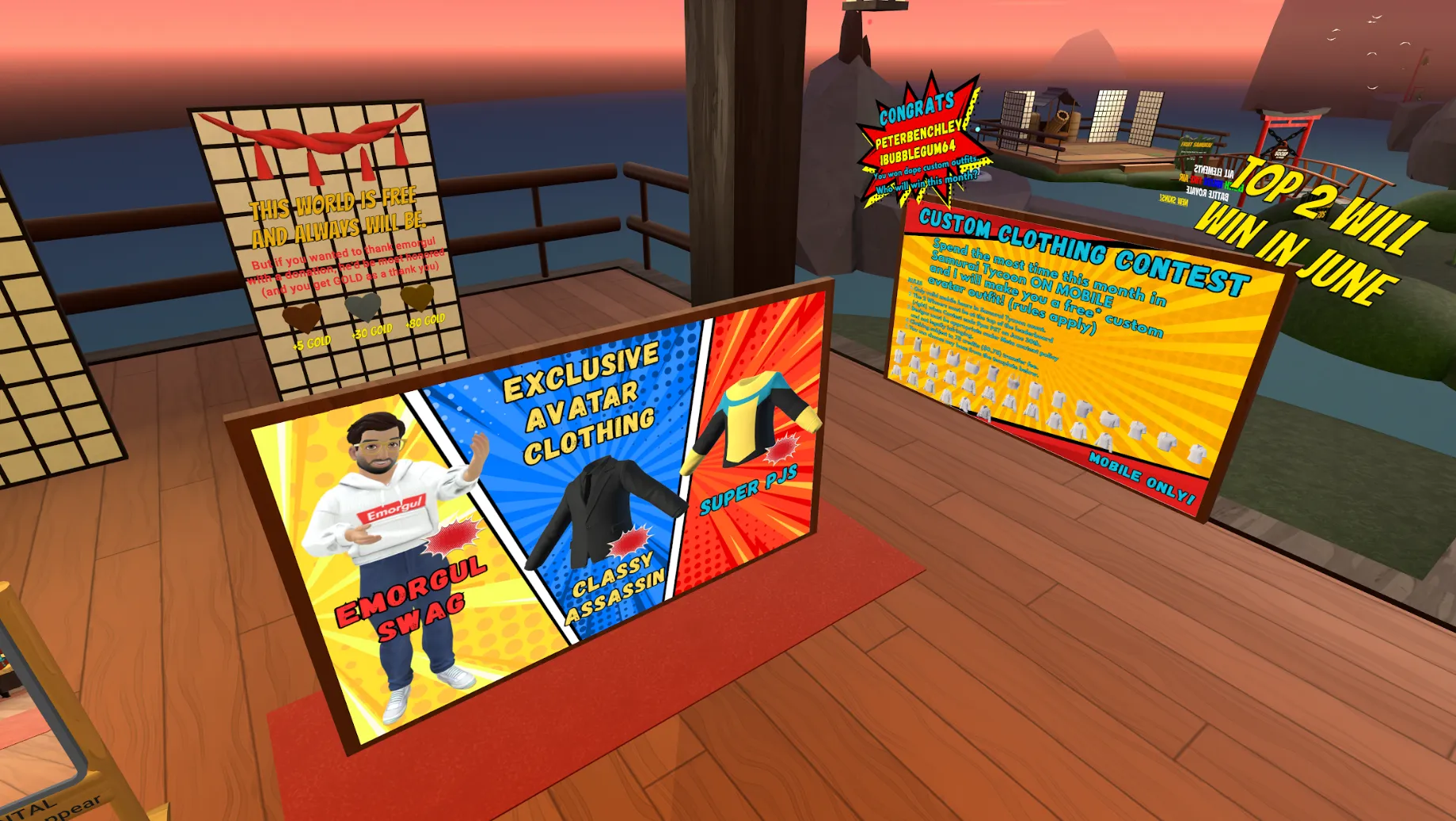
Emorgul’s Samurai Tycoon contest, advertised above with custom in-game signage, cleverly boosted mobile playtime by rewarding top players with exclusive clothing.
Your blueprint for building a creator business
Emorgul turned his personal mantra of “Making wonderful things that make people happy” into a powerful business strategy. This journey offers a clear blueprint for how to do the same. First, commit to joyful design to attract a passionate community. Then, empower that community to be your creative partner. This approach creates a virtuous cycle, ensuring that as the experiences improve, the audience and the business grow right along with them.
The following takeaways are the pillars of this approach:
- Anchor your world in familiar themes: Use recognizable elements to ease players in, then lean into the original concept that makes your world unique.
- Find the core mechanic and polish it obsessively: Make the thing players do most often in your game the most delightful part of the experience.
- Connect your worlds to boost discovery: Linking your worlds allows a single hit to lift your entire portfolio of creations.
- Let your community guide iteration: A world that evolves with player feedback can create more loyalty than a single, perfect launch.
- Monetize ethically and in line with player desires: Sell enhancements players actually want, not revenue-driven additions.
- Use AI as a support tool, not a replacement: Leverage technology for backgrounds and assets while focusing your creativity on core gameplay.
Ready to build your own thriving universe?
Creators like Emorgul are transforming their passion into full-time careers with help from the Meta Horizon Creator Program. With powerful creation tools, monetization support and a vibrant developer community, it’s never been easier to turn your ideas into impactful, lasting worlds.
Get started today—join the Meta Horizon Creator Program.
TAGS
Success Stories
Horizon Store
Emorgul
Explore more


Virtual reality / Meta Horizon
Support and legal
Virtual reality / Meta Horizon
Support and legal
Virtual reality / Meta Horizon
Support and legal
English (US)
© 2026 Meta