BUILDING FOR VR AND MR
Asgard’s Wrath 2
Optimizing performance and design for VR’s largest Action-Adventure game
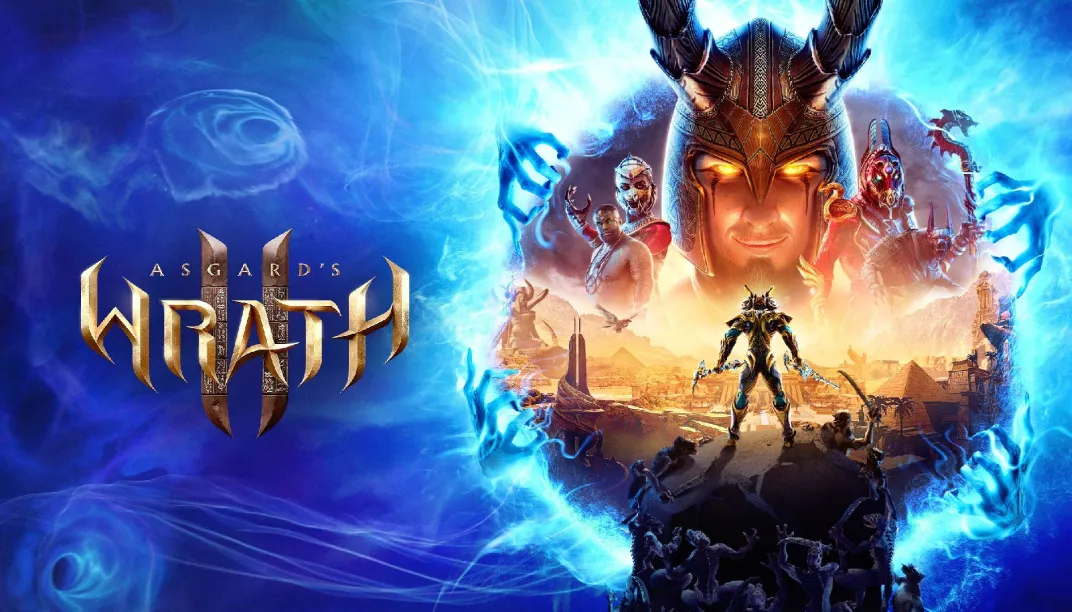
THEIR STORY
Pushing the envelope for bigger, better VR gameplay
Following in the footsteps of 2019’s hit Asgard’s Wrath, the team at Sanzaru Games spent years ensuring its newest title, Asgard’s Wrath 2, would build on its predecessor’s success to deliver a more expansive, immersive, and customizable experience for gamers on Meta Quest.
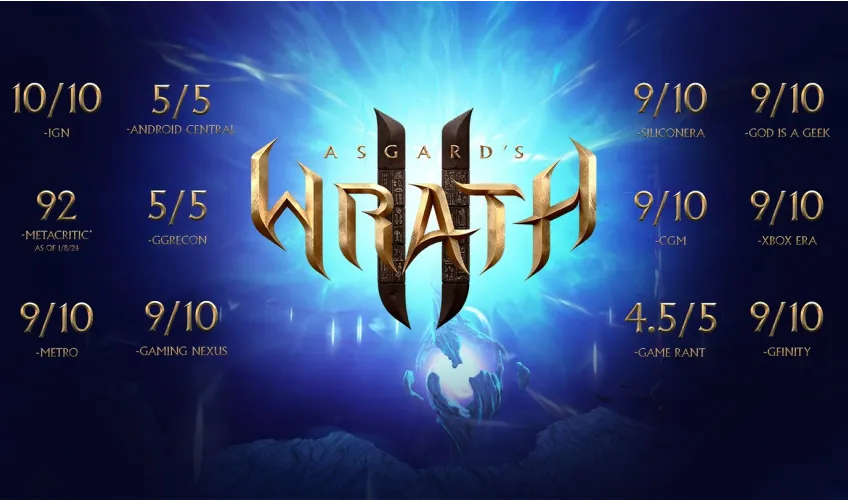
Through establishing systematic processes, understanding compute constraints, and technical prowess, Sanzaru was able to set a new standard for Action-Adventure game quality in VR, offering developers a north star for what games on Meta Quest can achieve. Their efforts have received massive acclaim—including a rare 10/10 “Masterpiece” rating from IGN—wowing players and critics alike through unparalleled visual fidelity, deep narratives, and virtual environments that foster people’s sense of adventure.
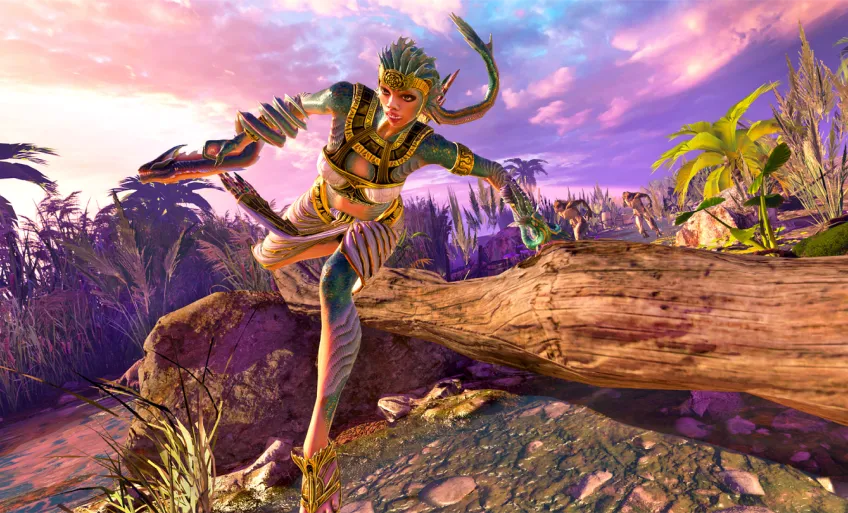
THEIR GOAL
Retain the old, elevate the new
Like the best sequels, Sanzaru aimed for Asgard’s Wrath 2 to maintain the essence of its predecessor while scaling up capabilities, feature sets, world depth, and complexity. The team hoped to push Meta Quest to its limits and deliver an experience with performance, depth, and visual quality that would be enjoyable for any type of play style. The team's ultimate goal was to deliver a AAA experience that enabled players to enjoy the game at their own pace—without losing momentum or sacrificing the fun factor.
Intending to move quickly and reduce obstacles at the end of the development cycle, Sanzaru sought to approach development programmatically by building a succinct system in which different teams could work in parallel to cover more ground and eliminate the need to revisit design considerations later in the process.
THEIR SOLUTION
A systematic approach to design and optimization
Design and accessibility
To keep game content fresh and avoid player fatigue, initial design considerations centered around a strong hook with a narrative through line that opens up branching sagas with new heroes, followers, mechanics, and storylines. A focus on creating “bite-sized chunks” of flexible gameplay would enable both casual and dedicated players to get the same rewarding experience and play to their preferred style.
After nailing down gameplay designs and thinking through the player journey, the team turned its focus towards accessibility and comfort in an effort to reduce fatigue and let players play in their preferred way. Optional features like Fast Travel were deployed so players could explore through interactions unique to VR, or quickly move between areas, while design choices were made specifically to enable an enjoyable experience playing standing up or sitting down. By simply pressing the right analog stick, players can recalibrate their height and enjoy the thrills of Asgard’s Wrath 2 in their preferred gaming position.
Key takeaways:
- Develop a strong hook at the beginning of the game.
- Layer in additional gameplay and narratives to keep the user experience fresh.
- Break up design and optimization so features could continue to be added and iterated on first, saving performance considerations and optimizations for later in the development cycle.
- Think through the various ways in which players may want to enjoy the game.
- Mitigate tedious or repetitive tasks during gameplay.
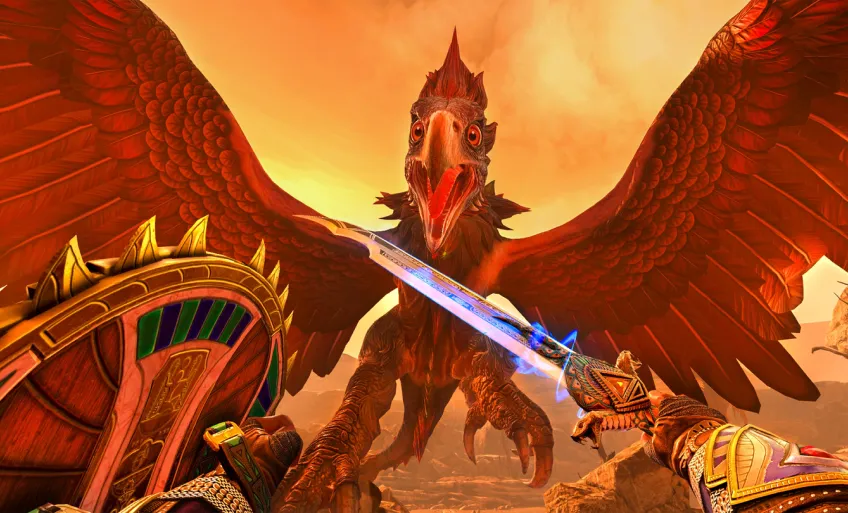
Optimization
As development progressed, it became clear that optimization was increasingly necessary due to the growing size of the game as it pushed the boundaries of hardware. To uphold quality standards and drive debugging efficiency, Sanzaru deployed a strike team approach enabling specialized teams to work independently. A systematic pipeline was set up between engineering and QA teams to identify and remedy drops in frame rate, bugs, and other performance issues.
There were long days, but the team was able to fix more than 25,000 bugs within just a few months. All in all, the team spent roughly a year pushing and iterating visual fidelity and object counts, while some game features like minigames and character sidequests were eventually scrapped because they couldn’t meet Sanzaru’s quality standard. By deploying a systematic approach to debugging throughout the development cycle, the team paved a path for rapid iteration and performance optimizations that mitigated issues as they arose.
Sanzaru prides itself on cultivating an ambitious culture of taking risks and being bold with new ideas. Saying “no” to new features is never easy, but an intentional shift was made away from design and towards optimization as launch day approached. At this stage, more manpower was allocated to fixing urgent issues that would impact the overall experience, such as framerate. It was during this phase that earlier efforts to systematically find and eliminate bugs became crucial, as fewer bugs remained in the days leading up to launch that may have required further iteration.
Key takeaways:
- Define a process for optimization that allows for forward progress and debugging simultaneously.
- Establish a debugging pipeline between engineering and QA so bugs are identified and addressed as they arise.
- Evaluate nonessential gameplay and features, or in other words, aspects of the game that may add less value or even hamper game quality.
- Plan out a development priority roadmap to ensure deadlines are met and teams have adequate resources, time, and bandwidth to meet project goals.
THEIR SUCCESS
Launching a new standard for immersive gaming
Sanzaru hoped to deliver an unforgettable adventure unlike anything seen before in VR. With Asgard’s Wrath 2, Sanzaru did that and perhaps more, launching one of the most critically acclaimed VR titles ever and redefining what audiences can expect from VR gaming. From start to finish, Asgard’s Wrath delivers an experience that never loses momentum and keeps players squarely immersed in its expansive, Action-Adventure RPG adventure.
By establishing strong internal processes, Sanzaru was able to tackle design, iteration, and optimization in an organized and effective manner. Its ability to define development stages and have different teams working in parallel meant that groups could narrow their focus on specific design or optimization tasks, resulting in enhanced quality.
10/10
Rating from IGN
4.2/5
Stars on the Meta Horizon Store
"The best VR game ever made."
— Andriod Central
"2023 Quest Game of the Year."
— Road to VR
 Key factors in allowing us to have our performance success was us as a collective group just agreeing to shift resources and so we waited until the strategic time in our game development toward the end where we felt like it was time for us to just take key people off of feature development and then move them over into optimization, so we had these dedicated resources just focused on that”
Jenny Huang
Head of Production, Sanzaru Games
 Our primary job is to help content creators with their completely insane ideas. We then take that and we accelerate workflows so that the we can go wide; we can have a 100 people or 280 people all developing different pieces of content with knowing that they're not going to break the game every day. And then finally there are some times where you just need that one engineer to throw an axe about 350 times over four hours to to make it feel that good in VR.”
Evan Arnold
Director of Technology, Sanzaru Games
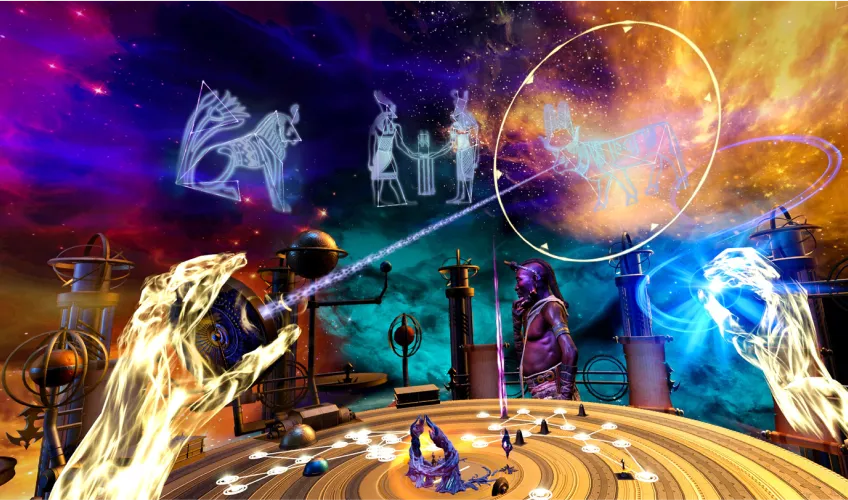 The bite-sized chunks is something that we're always thinking about. You know you might have a player that wants to be in VR for 10 minutes [or] someone that wants to be in there for an hour [or] two hours, [so] we're always thinking about that about the way that we break up the game and set up the overall structure.”
Matthew Kraemer
Creative Director, Sanzaru Games
TAGS
Success Stories
Horizon Store
Asgard's Wrath 2
Explore more


Virtual reality / Meta Horizon
Support and legal
Virtual reality / Meta Horizon
Support and legal
Virtual reality / Meta Horizon
Support and legal
English (US)
© 2026 Meta