IMPLEMENTING MIXED REALITY
Arkio, Eleven Table Tennis, Cubism
Elevating user experience and business outcomes with mixed reality
THEIR STORY
Bringing a fresh perspective to fan-favorites
Mixed reality (MR) is quickly transforming the immersive landscape with new capabilities developers can use to deepen feelings of presence, enable more realistic interactions between virtual and physical objects, and design more engaging experiences. Across app genres, developers behind some of the top games and apps on Meta Horizon have been quick to implement capabilities like Passthrough, Boundary API, and Spatial Anchors, to give audiences a new way to enjoy their favorite experiences.
Thomas Van Bouwel’s Cubism was one such early adopter. Launched in 2020, Cubism has become a fan-favorite thanks to its simple yet deceivingly captivating gameplay, with a new MR mode that lets players solve an array of puzzles in the comfort of their physical environment. For Fun Labs’ 2020 hit Eleven Table Tennis quickly followed suit, integrating Passthrough that both enhances feelings of presence between players and helps ensure the safety of its audience during casual and competitive matches. While MR has many applications for immersive gaming, it can also be a powerful tool in fueling collaboration and creativity. The team behind the 3D modeling app Arkio combined core MR capabilities like Passthrough and Spatial Anchors with more recent ones like Boundary API to help designers build rapidly in human and model scale environments with numerous collaborators.
With MR paving the way for blended environments that help people explore, connect, and play in new ways, these apps have experienced significant, positive impacts on engagement and retention while achieving growth with new audiences in the Meta Horizon Store.
Arkio
THEIR GOAL
Unlock new experiences in familiar environments
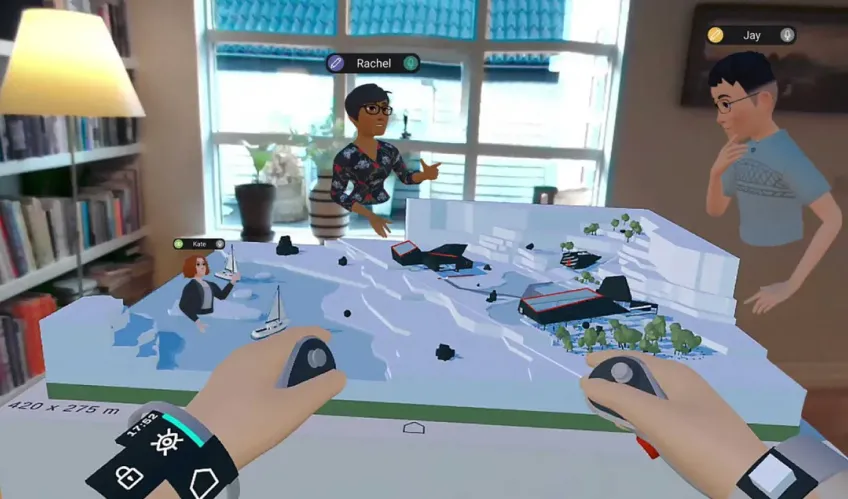
For Arkio, MR offered a chance to help designers seamlessly build real and virtual spaces by providing varying degrees of immersion and the ability to model and overlay virtual objects over physical ones. The aim was to enhance productivity and creativity by enabling designers to make physical environments a part of the design experience and collaborate with others efficiently.
Looking for new ways to enhance Cubism’s gameplay, Van Bouwel started looking at MR as a way to help players feel more engaged. The hope was that implementing Passthrough would translate into flexible features that give players more freedom to choose where and how they solve the game's puzzles.
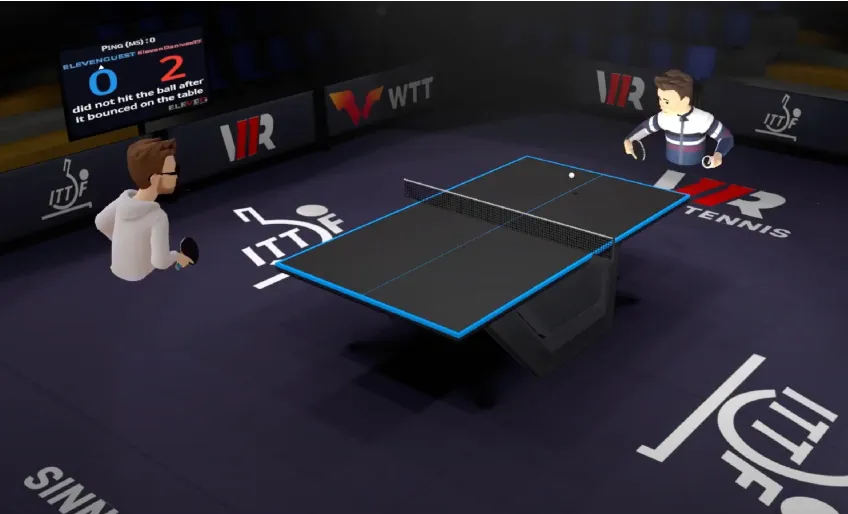
Whether playing a friendly table tennis match against a friend or competitively online, being present and aware are keys to coming out victorious in Eleven Table Tennis. After hearing players voice their desires for an MR mode, the team at For Fun Labs began looking at ways to increase spatial awareness and enable players to move around more freely during matches without the worry of running into physical objects in their space.
THEIR SOLUTION
Build tailored solutions using advanced MR capabilities
Ariko
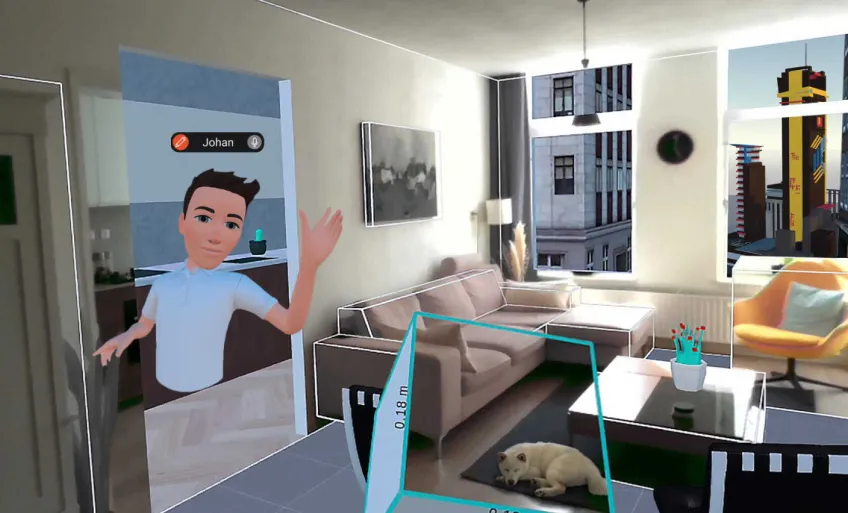
To deliver functionality that would allow users to design using their physical space and objects, the developers of Arkio created a workflow to import room scan data from Meta Quest’s Space Setup and convert it to Arkio geometry. This enabled people to quickly map out their immediate surroundings and make edits with in-app tools.
Given the hands-on and malleable nature of Arkio, maintaining persistent alignment between physical and virtual objects was also a top priority. This functionality was achieved through Spatial Anchors, which allowed the team to save several anchor positions within a scene to help align designs in human-scale environments and switch back and forth between design options.
For these larger, human-scale environments, enabling designers to move freely throughout and around their designs can power a more efficient workflow. By leveraging Boundary API and customizing it to fit their app’s unique needs, Arkio’s developers were able to remove the guardian boundary and open the door for faster iteration and enhanced collaboration. To further advance collaboration-enhancing features, the team leaned on Shared Spatial Anchors to support colocation along with custom tools providing the ability to search through each colocated user and automatically align them. As an extra safety feature to prevent collisions between users and physical objects, Passthrough was also used to create a feature that dims the opacity of a model and provides a subdued view of the physical world.
All of these implementations required extensive debugging and sifting through large log files. Successfully expediting this process across multiple devices required building custom in-house diagnostic tools that allowed the team to listen to specific logs and log events while the app was live. These tools greatly reduced iteration time by enabling the team to observe the app events propagating between devices in real time and identify dysfunctional steps in a distributed environment.
Eleven Table Tennis
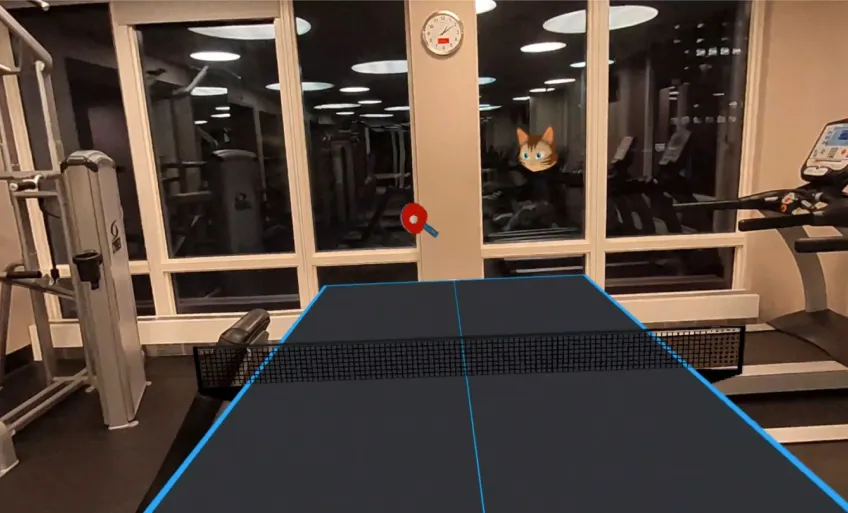
To give players more confidence to make better use of their physical space and lean into the active aspects of table tennis, the team at For Fun Labs utilized Passthrough to provide players with a full view of their physical environment.
With MR giving people a better understanding of their positioning within physical space, players can lunge, swing and move side-to-side without accidentally bumping into furniture and feel more comfortable during their matches.
Cubism
To reduce onboarding friction for new players and provide a fresh experience for Cubism fans, the Cubism team implemented a combination of Hand Tracking and Passthrough. These capabilities enabled players to experience the game in an entirely new way by intuitively using their hands to solve puzzles as they would in the physical world. With passthrough, players could feel more at home in their physical environment and stay connected to the people around them while working through the game's puzzles.
By leveraging extensive playtesting and sharing updates to its community, the team peaked interest and ensured the MR experience was seamless for new and existing players alike.
THEIR SUCCESS
Delivering fresh user experiences for a wide audience
Through the use of MR capabilities, the teams behind Arkio, Cubism, and Eleven Table Tennis fueled new gameplay, user acquisition, and retention growth, giving people a fresh perspective with the freedom to view, navigate, and interact with virtual objects within their virtual environment.
After implementing MR, Eleven Table Tennis reported longer session durations with some players staying engaged for over three hours, a figure higher than any duration seen in the fully immersive game mode. With new ways for players to compete in the comfort of their physical space, Eleven Table Tennis also experienced increased sales for both Meta Quest 2 and Meta Quest 3.
Arkio’s implementation of colocation and Shared Spatial Anchors now help enable the app to support up to 24 people working together comfortably in MR remotely or in person. By leveraging Boundary API and Spatial Anchors, users don’t need to adjust their movements according to the limits of their usable space and gain the ability to model new design ideas on top of their real environment.
For Cubism, the addition of Passthrough has translated into flexible gameplay that gives players more freedom to choose where and how they solve the game's puzzles. The game’s simplicity is underscored by a familiar physical environment that provides a highly engaging yet ideal introductory MR experience.
 We’ve always envisioned switching between complete immersion (virtual reality) to working on the real world (augmented reality) as a vital part of the design workflow. Mixed reality allows us to take this to the next level as we can decide the levels of immersion between the virtual and real so our user can more seamlessly design real and virtual spaces.”
Johan Hanegraaf
Co-founder and Head of Product at Arkio
 With MR, it’s much more comforting to have a little bit of the real world around you, with the digital world overlaid on top of your normal environment. It’s evident that people feel safer and more likely to spend more time in-headset this way. It’s also going to be a game-changer for multiplayer experiences, where you can have people virtually hanging out in your home playing with you.”
For Fun Labs
Playtest as much as you can, specifically with MR and Hand Tracking,” he says. “We had a demo on Steam and had many early playtesters before pitching the game to the Meta Quest Store. At every stage of the development process, we shared things publicly with our community on social media—this helped us drive awareness and early interest. Also, it’s important to know that there are things you can’t control, like platform-level technical hiccups that come with the territory for new tech. When you encounter these types of issues, it’s important to be patient and communicative; in my experience Meta's Developer Relations team has been very open and responsive to feedback and bug reports.”
Thomas Van Bouwel
Creator of Cubism
These two updates [Boundary API and Spatial Anchors] were very important to us as they allowed us to break free from the constraints of the virtual guardian system and make the user's environment part of the design experience. When you are working in a physical space and modeling digitally and you need to freely move around multiple rooms of your space, the guardian system puts a major movement restriction that slows and limits the workflow of our users Our users now no longer need to think about these boundaries as they can move around more freely and model new design ideas on top of their real environment.”
Johan Hanegraaf
Co-founder and Head of Product at Arkio
TAGS
Success Stories
Horizon Store
Arkio, Eleven Table Tennis, Cubism
Explore more


Virtual reality / Meta Horizon
Support and legal
Virtual reality / Meta Horizon
Support and legal
Virtual reality / Meta Horizon
Support and legal
English (US)
© 2026 Meta